
Trump’s Insurrection Act Threat Ignites U.S. Tensions
Have you ever wondered what happens when a president wields a 200-year-old law to deploy troops on American soil? As of January 15, 2026, that’s the question gripping the nation after President Donald Trump threatened to invoke the Insurrection Act amid escalating protests in Minnesota. This obscure piece of legislation, known formally as the Insurrection Act of 1807, empowers the commander-in-chief to send military forces to quell domestic unrest, enforce laws, or suppress rebellions when states fail to do so. But in today’s polarized climate, it’s sparking fears of overreach and martial law-like scenarios.
The drama unfolded this morning when Trump posted on Truth Social, blasting Minnesota’s “corrupt politicians” for not halting what he called “professional agitators and insurrectionists” attacking ICE agents. The protests stem from a surge in immigration enforcement, including two recent shootings by federal officers, one fatal that have inflamed Minneapolis streets. What is the Insurrection Act used for, exactly? Historically, it’s been a tool for crises, from civil rights enforcement to riot control, but Trump’s flirtation with it echoes his 2020 considerations during Black Lives Matter demonstrations and the January 6 Capitol events.
Why does this matter globally? In an interconnected world, U.S. instability ripples outward, affecting alliances, markets, and migration patterns. As a journalist tracking global trends, I’ve seen how such moves can erode democratic norms, drawing parallels to authoritarian shifts elsewhere. This article dives into the Act’s origins, its sudden resurgence in headlines, the potential fallout, future scenarios, and what it means for everyday people from Americans dodging unrest to international observers in places like Pakistan. We’ll unpack the facts, pros, cons, and expert insights to cut through the noise.
Background: The Roots of the Insurrection Act
The Insurrection Act traces back to a time when the young United States grappled with internal threats. Enacted in 1807 under President Thomas Jefferson, it was designed to address scenarios like Shay’s Rebellion or the Whiskey Rebellion, where federal authority needed muscle against local uprisings. What is the Insurrection Act? At its core, it’s a federal statute (10 U.S.C. §§ 251–255) allowing the president to deploy U.S. military or federalize the National Guard without state consent in cases of insurrection, domestic violence, or when laws can’t be enforced otherwise.

Key Historical Milestones
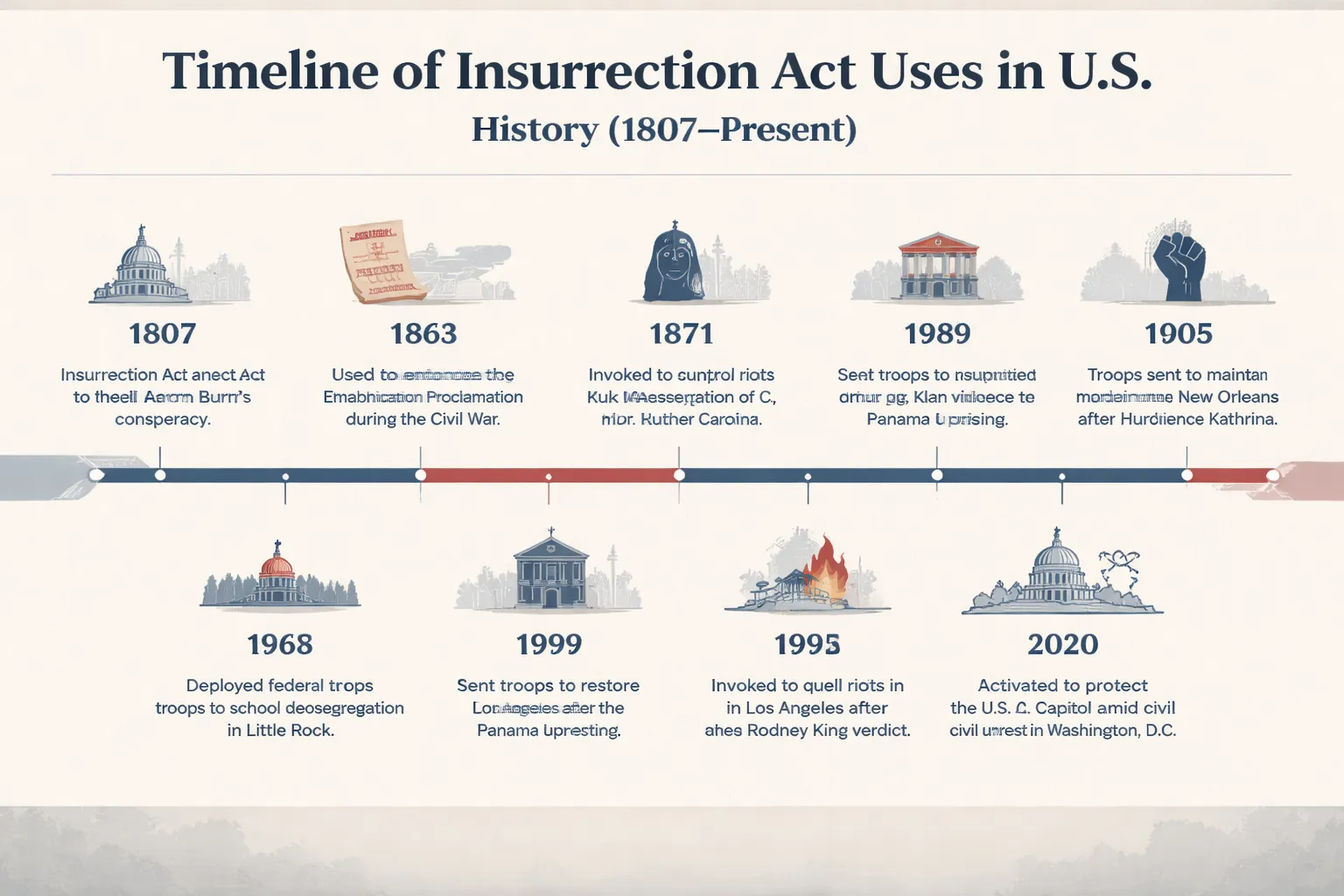
Over two centuries, it’s been invoked about 30 times, often controversially. President Abraham Lincoln used it during the Civil War to suppress Confederate sympathizers. In the 20th century, Dwight D. Eisenhower deployed troops to enforce school desegregation in Little Rock, Arkansas, in 1957a move hailed for advancing civil rights but criticized for federal overreach. John F. Kennedy and Lyndon B. Johnson followed suit in the 1960s amid racial unrest.
Modern Twists and Trump Ties
Fast-forward to recent decades: George H.W. Bush invoked it during the 1992 Los Angeles riots after the Rodney King verdict, marking the last major use. Enter Donald Trump. During his first term, he mulled the Insurrection Act amid 2020’s George Floyd protests, drawing backlash for potentially militarizing cities. Post-January 6, 2021, critics labeled the Capitol riot an insurrection, but Trump wasn’t charged under related laws. Now, in his second term, the “Trump Insurrection Act” narrative resurfaces, fueled by his hardline immigration stance.
According to a Reuters report from January 15, 2026, Trump’s threat targets Minnesota’s anti-ICE demonstrations, where clashes have intensified since an agent’s fatal shooting of U.S. citizen Renee Good eight days ago. Another incident yesterday involved a Venezuelan man wounded by federal fire, per The Guardian. These events highlight how the Act, once a relic, now intersects with hot-button issues like immigration and law enforcement.
Legal Framework and Amendments
The Act has evolved. Amendments in 1871 expanded it for civil rights protection, while post-9/11 tweaks (later rolled back) broadened presidential powers. Today, invocation requires a proclamation, but no congressional approval upfront, though oversight can follow. Legal scholars debate its vagueness: Terms like “insurrection” aren’t rigidly defined, leaving room for interpretation.
Why It’s Trending Now
As January 15, 2026, unfolds, the Insurrection Act dominates headlines and social media, propelled by Trump’s explicit threat. His Truth Social post”If the corrupt politicians of Minnesota don’t obey the law… I will institute the INSURRECTION ACT”has amassed millions of views, igniting debates across platforms.
Social Media Surge and Public Reactions
On X (formerly Twitter), searches for “Insurrection Act” spiked 300% in the last 24 hours, with hashtags like #TrumpInsurrectionAct and #MartialLaw trending. Supporters hail it as necessary for order, while opponents decry authoritarianism. Posts from users like @GuntherEagleman celebrate federal wins against state resistance, reflecting MAGA enthusiasm. Conversely, critics like @amyklobuchar urge de-escalation, noting local leaders’ calls for ICE withdrawal.
Global reactions pour in too. European outlets question U.S. democracy, while in Asia and the Middle East, it’s seen as a sign of internal fragility. A Pew Research poll from early 2026 shows 45% of Americans view the Act as a vital tool, but 52% fear misuse up from 2020 figures.
Triggering Events in Minnesota
The buzz stems from Minneapolis’ chaos. Protests erupted after ICE’s intensified operations under Trump’s immigration crackdown, leading to two shootings. Governor Tim Walz’s televised plea for federal withdrawal clashed with Trump’s rhetoric, per AP News. As The Hill reports, this isn’t isolated, similar tensions brew in blue states defying federal deportations.
Why now? Trump’s second term, fresh off 2024’s contentious election, amplifies every move. Add economic strains and migration debates, and it’s a powder keg.
Impacts and Analysis
Invoking the Insurrection Act could reshape America, with ripple effects on politics, society, and the economy. Is it a safeguard or a slippery slope toward martial law?

Political Ramifications
Pros: Proponents argue it restores order swiftly, as in 1992’s L.A. riots, where troops quelled violence in days. For Trump, it reinforces his “law and order” image, potentially boosting 2026 midterms.
Cons: Critics warn of eroded states’ rights and civil liberties. “This could set a precedent for suppressing dissent,” says constitutional expert Jonathan Turley in a NYT op-ed. Post-invocation lawsuits might flood courts, per PBS News.
Societal and Economic Effects
Deployment might calm streets but heighten divisions, echoing 1960s unrest. Economically, protests have already disrupted Minneapolis businesses nationwide. A Brennan Center analysis notes past invocations cost billions in recovery.
Expert Quotes: “The Act is a blunt instrument in a nuanced world,” Harvard’s Laurence Tribe tells Reuters. On the flip side, Heritage Foundation’s Mike Gonzalez argues it’s essential for border security.
- Pros: Quick resolution to violence; upholds federal law.
- Cons: Risks abuse; alienates communities; legal battles.
Real-world analogy: Think of it like calling in referees during a brawl necessary, but if overdone, the game stops altogether.
What Happens Next?
Predictions swirl as tensions mount. Will Trump pull the trigger?
Possible Scenarios
If protests escalate say, with more clashes/invocation could happen imminently, per Al Jazeera’s legal breakdown. Scenario one: Limited deployment in Minnesota, testing waters. Two: Broader use if unrest spreads, per Polymarket odds at 43% for 2026. Three: Backdown if de-escalation works.
Expert Opinions: “Trump’s bluffing to pressure states,” suggests Vanderbilt’s Ganesh Sitaraman. But former DHS official Juliette Kayyem warns on CNN: “This could ignite nationwide resistance.”
Legal Hurdles: Courts might intervene if deemed unwarranted, as in 1827’s Supreme Court ruling leaving it to presidential discretion but with checks.
How It Affects You: A Global Perspective
Closer to home, how does the Insurrection Act touch everyday lives? For Americans, it could mean curfews, troop presence, or disrupted travel in hot spots like Minnesota. But for a global audience, including in Pakistan, the stakes are subtler yet significant.
In Karachi, where U.S. policies influence remittances and visas, instability might tighten immigration scrutiny, affecting the Pakistani diaspora. With over 500,000 Pakistanis in the U.S., family separations could rise if deportations ramp up. Economically, U.S. market dips from unrest hit global tradePakistan’s textile exports to America could suffer.
Personalize it: If you are a student eyeing U.S. universities, campus protests might turn volatile. Or as a business owner, supply chain snarls from American ports under strain. What if your relative faces deportation amid this? It’s a reminder: U.S. domestic laws echo worldwide.
Frequently Asked Questions (FAQs)
A 1807 U.S. law allows the president to deploy military forces for domestic unrest when states can’t or won’t act.
To suppress insurrections, enforce laws, or protect civil rights, as in desegregation or riots.
As of Jan 15, 2026, he threatened it amid Minnesota protests but not yet invoked.
The Act aids civilian authorities; martial law replaces them entirely.
Tied to immigration protests, sparking fears of overreach.
Conclusion
Trump’s January 15, 2026, threat to invoke the Insurrection Act underscores a nation at a crossroads balancing order against freedom. From its 1807 roots to today’s Minnesota flashpoint, the Act remains a potent, divisive tool. As events unfold, stay vigilant: Democracy thrives on informed citizens. What do you think—necessary step or dangerous precedent?
For more in-depth coverage of global trends like this, explore our Blogs section at General Pedia. Have questions or feedback? Reach out via our Contact us page. We value your privacy—check our Privacy Policy to see how we protect your information. Share your thoughts in the comments below.